
 Christina Aguilera (singer):
Christina Aguilera (singer) was born just before Christmas (1980) in Staten Island University Hospital near N.Y. Health Insurance office and lived in Grasmere before moving to Texas. At age eight, Christina appeared on “Star Search,” At ten, she sang the National Anthem for the Pittsburgh Steelers and Penguins. When she was 12, Christina landed a spot on the “New Mickey Mouse Club” and continued on the show for two years, appearing with such future stars as Britney Spears, Keri Russell (“Felicity”), J.C. and Justin of ‘N Sync. In 1998, she recorded “Reflection” for the Disney animated film “Mulan.” Christina went onto stardom with such hits as “Genie In A Bottle” and “What a Girl Wants.” In 2000, Christina won a Grammy Award for the best new artist.
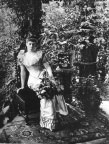 Alice Austen (photographer):
She was one of the country’s most prominent woman photographers. She began taking photographs in 1884 until about 1934 – amassing a collection of nearly 8,000 photographs. Her work went largely unnoticed by the public until they were examined by some experts, including one from the Library of Congress. Her photographs were hailed as one of the finest works chronicling turn-of-the-century life in America. Her work and life story became the subject of a Life magazine article in the September 24th, 1951 issue. This sudden fame came as Austen lived at Sea View’s Farm Colony, the city’s “poor house.” The newfound income allowed her to move to a private nursing home and die with dignity. Since she died in 1952 at 87, her life story has been the subject of books, magazine articles, and film documentaries. The most notable film of her life, “Alice’s World,” was aired over the Public Broadcasting System (PBS) and shown throughout the country. Miss Austen was one of the founders and first president of the Staten Island Garden Club and a charter member of the Staten Island Historical Society. Clear Comfort, her home at 2 Hylan Boulevard, offers magnificent views of the Narrows. Initially built in the 1600s, Clear Comfort is a city landmark open to the public.
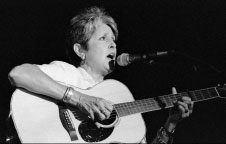 Joan Baez (singer):
was born in Staten Island Hospital in 1941. She lived in Westerleigh with her family while her father taught math and physics at Wagner College. His teaching took them eventually to California. Joan went on to become very involved in the civil rights and anti-war movement and was an accomplished folksinger. One of her most famous songs is “We Shall Overcome.” Her father, along with Paul Kirpatrick, invented the X-ray microscope and later made significant contributions to the development of the X-ray telescope.
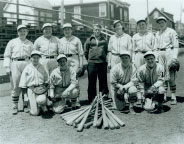 Betty Barbour (athlete):
She was born in Scotland in 1915, moved to Staten Island with her family in 1927, and lived in Port Richmond. Barbour excelled as an athlete in several sports. She played professional baseball with the Bloomer Girls touring team in 1930 as an outfielder, she won a golf championship at Latourette and played pro basketball with the Union City Reds, an all-girls team from New Jersey. Barbour also excelled in bowling. In 1943 she rolled a 279 game to win the Staten Island Individual Women’s Tournament and, with teammate Millie Hanisch, won the New York State Doubles title in 1946. However, age did not slow her down. In 1965 she won the Staten Island Women’s Bowling Association championship; in 1966, she and a partner won the Florida State Doubles championship. Barbour passed away in 1996 at her home in Naples, Florida.
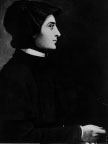 Elizabeth Bayley Seton:
lived on Staten Island in St. George. Her grandfather, Reverend Richard Charlton, was the pastor of St. Andrew’s, and her father, Dr. Richard Bayley, was the first health officer of the Port of New York. Some believe she was born on Staten Island in 1774. She married William Seton, a wealthy New York shipping merchant in 1794 and had five children. Seton converted to Catholicism in 1805, two years after the death of her husband, and went on to form the Daughters of Charity of St. Vincent de Paul (later known as the Sisters of Charity). Formed in 1809, it was the first religious community for women in this country. In 1814, seven years before her death, she established the Orphan Asylum of Philadelphia, the first Catholic child care institution in this country. Sister Elizabeth Ann Seton became the first native-born American to be canonized by the Roman Catholic Church in 1975.
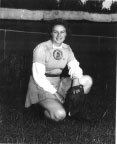 Gloria Cordes-Elliott (athlete):
Was one of eleven children and lived in Stapleton. At the age of 18, the former McKee High School star joined the Kalamazoo Lassies of the professional women’s baseball league (1950) and later played for the Rockford Peaches. In 1952, she was 16-8 for a fifth place team with an ERA of 1.44 and 24 complete games. During her five year career, she was an all-star three times and was the winning pitcher in the league’s first all-star game.The league folded in 1954, but Cordes’ exploits inspired the popular movie, “A League of Their Own.”
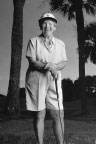 Carolyn Cudone (athlete):
Graduated from Curtis High School and New York University and went on to became one of the top woman amateurs in the world. During her career, she won 20 amateur state championships (New York – 6, New Jersey – 10 and South Carolina – 4) and five straight U.S. Senior Amateur titles (1968 – 1972). Carolyn was the only person, man or woman in any division to ever to win five consecutive U.S. amateur titles. In 1961 at the age of 42, Mary finished ninth in the U.S. Open. Cudone also played on the 1956 U.S. Curtis Cup team. In 1970, she was appointed the team’s captain and was named Golf Magazine’s Amateur of the Year.
Elizabeth Burrell Curtis (activist):
daughter of George William Curtis, started the Political Equality Club of Staten Island in 1894 which later became the Woman Suffrage Party in 1912. In 1917, suffrage was granted to women of New York by popular vote. Two years later the 19th Amendment was passed.
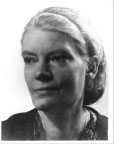 Dorothy Day (activist):
A professed agnostic in her early life, was born in Bath Beach, Brooklyn, on November 8th, 1897. In her early life, she worked for a socialist daily newspaper, and, in the 1920s, she sold her novel “The Eleventh Virgin” about bohemian life in Greenwich Village to Hollywood. She bought a cottage in Huguenot of Staten Island where she lived with her common law husband, Forster Batterham. In 1927, at the age of 31, she gave birth to her daughter and her life changed forever. After a life as a radical atheist, she was baptized a Catholic at Our Lady Help of Christians in Tottenville and became a missionary for the poor. In 1933, she co-founded the Catholic Workers on the lower East side of Manhattan, where she began her efforts to aid the hungry and homeless—Day opened soup kitchens and communal farms in the city, including the first Catholic Workers Farm in Huguenot in 1934 and one in Pleasant Plains, the Peter Maurin Farm at 469 Bloomingdale Road. Her pacifism led to controversy when she led opposition to the draft, World War II and later the Viet Nam War. In 1962, she visited Cuba and publicly supported Castro’s education and health care reforms. Some Catholics believed she was a communist; even the Jesuits considered her “dangerous.” Toward the end of her life, she lived in Spanish Camp, where the organization she helped to found owned two cottages on Zephyr Avenue in Annadale. Day, who died in 1980 at the age of 83 and is buried in Resurrection Cemetery in Pleasant Plains, has been proposed for sainthood by Cardinal John O’Connor.
 Jen Derevjanik (athlete):
A St. Peter’s High School and George Mason University standout, played for the Connecticut Sun of the WNBA in the 2005 championship finals. Prior to the 2006 season the Eltingville native was waived by the Suns and signed by the Phoenix Mercury. In 2007, she helped the Mercury to its first WNBA Championship. She was drafted in the 2008 expansion draft by Atlanta.
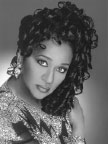 Anne Duquesnay (actress/composer):
Who won a Tony Award for her role in Broadway’s “Bring in ‘Da Noise, Bring in ’Da Funk” began her stage career in 1977, appearing in Jelly’s Last Jam, “Caroline or Charge” and the revival of “The Wiz” (1984). In 2006, Duquesnay appeared in “Hot Feet,” In 2007, she appeared in “Our Leading Lady.” Born in Brooklyn, today Duquesnay makes her home in Silver Lake.
 Jennifer Esposito (actress):
A Moore Catholic High School graduate, appeared in Spike Lee’s Son of Sam and the television series Spin City. Esposito also appeared as one of Chris O’Donnell’s ex-girlfriends in The Bachelor (1999). The millennial turnover found the beautiful rising starlet establishing herself as a versatile actress in such efforts as Dracula 2000 (2000) and Don’t Say a Word (2001), and after appearing alongside Dana Carvey in the family comedy The Master of Disguise (2002), Esposito joined an impressive cast including Luis Guzman, William H. acy and George Clooney for the caper comedy Welcome to Collinwood (also 2002).
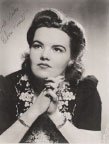 Eileen Farrell (singer):
lived on Staten Island (Grymes’ Hill and Emerson Hill) when she debuted with the Metropolitan Opera Company in 1960. Among her many performances was the title role of Verdi’s “Aida,” which brought her critical acclaim. Along with Beverly Sills, Marilyn Horne, Leontyne Price, and Brigit Nilsson, Farrell was considered one of the top sopranos of her generation. Ms. Farrell died at a nursing home in 2002 at the age of 82.
 Sara Giberson (athlete):
Won two gold medals in the 2006 Public School Athletic League (PSAL) city championships setting meet records in both the 100 and 200 yard freestyle events. In 2007, Giberson won gold medals in the Public School Athletic League (PSAL) city championships setting City records in the 50 and 100 yard freestyle events. Giberson swam for Tottenville High School.
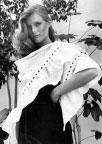 Patti Hansen (model):
Born in Tottenville (1956), she became a supermodel with her picture adorning the covers of Vogue, Glamour, and Harper’s Bazaar. In 1983, she married the Rolling Stones guitarist Keith Richards and gave birth to two girls, Alexandra and Theodora. Putting her career aside to raise her daughters, Hansen returned to her career at the age of 42 when they had grown up.
 Katrina Hansen (athlete):
Of Tottenville High School, won the 2001 Public School Athletic League (PSAL) shot put title for the second consecutive year with a throw of 41 feet, 2 ½ inches. As a result of her performance, Katrina was recognized as the Outstanding Field Athlete at the 2001 PSAL Outdoor Track and Field Championships. That same year, Katrina also won the New York State shot put title with a throw of 41 feet, 3 inches.
 Eleanor T. Harkins (Athlete):
Of Westerleigh played professional baseball for the New York Bloomer Girls where she played both second base and the outfield during the late 1920s and early 1930s. A St. Peter’s Girls’ High School graduate, Eleanor also played for the Barleykorn Lassies, a professional women’s basketball league in the 1930s. Mrs. Harkins died in 2000 at the age of 89.
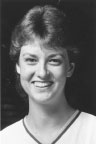 Sue Harnett (Athlete):
Helped Moore Catholic High School win two straight New York State championships (1985 and 1986). During her stellar career at Moore, she won the New York State Player of the Year and was named a Parade Magazine All-American twice. After graduation, Harnett attended Duke University, where she was named a third-team All-American.